Basement Insulation Pueblo, CO
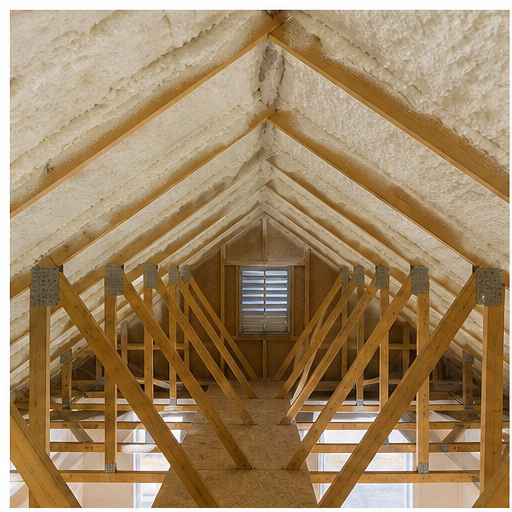
Basement insulation in Pueblo, CO usually starts with two questions: how dry is the space, and what are the walls made of.
Basement walls and rim joists are one of the largest uninsulated surfaces in many Pueblo homes. Pueblo’s hot summers and cold, windy winters push heat through bare concrete, block, or older masonry, and the rim joist at the top of the wall is often a draft path. This page walks through how basement insulation is typically planned so a quote request can be specific.
Why basements deserve a look in Pueblo homes
Rooms over a basement can feel cold in winter when the foundation wall and rim area are uninsulated, and a finished or partly finished basement can feel clammy or drafty near exterior walls. A good deal of Pueblo’s housing stock is older, and older foundations come in several types: poured concrete, concrete block, and stone or brick. Each one calls for a different approach, which is why the wall type belongs in any request. The older home wall insulation page covers masonry and mass-wall construction above grade.
Check moisture before choosing a material
Pueblo is dry compared with many parts of the country, but basements can still take on water from summer thunderstorms, poor grading, downspouts that discharge near the foundation, window wells, or irrigation. Look for staining, white mineral deposits on the wall, a musty smell, or damp spots after storms. Insulation is not a waterproofing system, so active leaks and drainage problems should be corrected first. The crawl space moisture checklist uses the same logic and is a helpful model for documenting what you see.
Common spray foam approaches for basement walls
- Closed-cell foam applied directly to the wall. Often considered where foam meets masonry, because it air seals, adds insulation per inch, and resists moisture. See closed cell spray foam.
- A thin closed-cell layer plus framed wall insulation. A hybrid approach that sometimes balances performance and cost in a finished basement.
- Open-cell foam in protected framed walls. Sometimes used where the cavity is dry and sound control or comfort is the goal. See open cell spray foam.
The closed cell vs open cell comparison explains the tradeoffs in more detail.
Don’t skip the rim joist
The rim joist and sill plate sit where the house meets the foundation, and they are one of the most common air-leakage points in a basement. Sealing them is often a smaller project than the walls, and it can be done on its own or as part of a larger plan. The rim joist spray foam page describes what affects that work.
Fire protection, finishing, and appliances
Building codes generally require foam left exposed in an occupied space to be covered by an approved thermal barrier, such as drywall, so finishing plans should be settled before the foam goes in. Also mention any furnace, water heater, or other combustion appliance in the basement, because tightening the space can affect combustion air and should be reviewed. The safety and curing guide covers ventilation and re-entry questions. Colorado homeowners commonly test for radon as well. Insulation is not a substitute for testing.
What to include in a basement insulation request
Useful details include the wall type (poured concrete, block, or stone), whether the space is finished, ceiling height, approximate rim joist length, any moisture history, current insulation, and photos of the walls and rim area. State whether the main goal is comfort, lower energy use, a finished living space, or sealing drafts. Then use the spray foam cost page and the cost calculator to frame a planning range. Work described on this site is performed by licensed, insured local professionals.
Frequently asked questions
Is spray foam a good option for basement walls in Pueblo?
It can be, especially for air sealing and for rim joists, but the right product depends on the wall type, moisture history, and whether the space will be finished. A site review is the best way to decide.
Do I need to fix moisture before insulating a basement?
Yes. Liquid water, damp concrete, or poor drainage outside should be corrected first, since insulation is not a waterproofing system. Mention any staining or past leaks in your request.
Can I finish my basement after spray foam is installed?
Often, yes. Foam left exposed in an occupied space generally needs an approved thermal barrier such as drywall, so plan the finishing steps with the contractor and check local code requirements.
Should I choose open-cell or closed-cell foam for a basement?
Closed-cell is often considered where the foam meets masonry or moisture exposure is a concern, while open-cell is sometimes used in protected framed walls. The closed cell vs open cell comparison covers the tradeoffs.
Will insulating the basement help with both summer and winter comfort?
Often it helps in both seasons, since air sealing and insulation reduce heat flow in either direction. Rim joists and exposed walls are usually the biggest opportunities.